Dreamer's Digest - Camera
A weekly report about dreams inspired by patterns from the collective unconscious.


Camera - Cup - Phone
Symbolic Spotlight

Camera
Unlike most of the symbols that have been featured in the Dreamer’s Digest so far, Camera is a relatively modern concept that we may be inclined to think of as being less deeply rooted in the psyche. Although it could be argued that the collective unconscious is not bound by the constraint of time, every human born so far has had a conception of Mother to some extent, while many humans have lived full lives without ever encountering the concept of a camera. What has persisted throughout time however, is communication and the recording of information. Whether the information recorded was via memories passed down through demonstration, or even through DNA passed as genes, this is an aspect of life that does in fact run deep in our history. It seems cameras could be viewed as an extension of this distribution and persistence of information. Perhaps it is useful to keep this in mind when cameras show up in dreams—as an attempt of capturing something inherently impermanent.
I’ve noticed the desire to take a photo often shows up in my dreams as a response to some kind of spectacle, to which my inclination is to photograph for egoic reasons. Either to show it to others because I don’t think they will believe that I actually saw a bird with the head of a goat, or to receive some amount of respect or accolades for taking it. Almost always in these situations, the dream interferes in a way that prevents me from actually taking the photograph. As if to say, “remember the reason why this is something worthy of being photographed in the first place.” It’s not for the preservation of the moment, but the appreciation of it. Ironically, the act of taking a photograph or video removes one from the present moment that is trying to be preserved. Attention shifts from the present to the future. Here we can begin to see that the camera, or any other method of recording information, is really a tool of reduction. The qualia of actual experience cannot be truly preserved. Compromises must be made. Like the shadows on Plato’s cave, photographs, words, and memory are an approximation of the real thing. When dreams of this nature arise, I ask myself, “Is there anything in my life that I am neglecting to be present with and live to its fullest extent?”
We can take this metaphor even further and explore another layer of the camera symbol as it pertains to the totality of our lived experience. Reality is a different thing than what we perceive it as through our five senses. We know, for example, that there are wavelengths of light outside the visible spectrum that our eyes have not evolved to see. What we perceive through our senses is merely the sensation our brains create from whatever stimuli they are receiving. Like how a camera takes a tiny sliver of light over a few milliseconds of time, our bodies take a tiny sliver of reality and parse it into something we are capable of comprehending. Too large of an aperture or too slow of a shutter speed results in too much light—an overexposed photo where all the information is lost. A camera lives most of its life in darkness. Contrary to the takeaway from the last dream scenario, there are other dreams where the significance of the camera seems to portray this narrowing of perception in a more positive light. A camera used intentionally can create beautiful works of art, or preserve our warmest memories. The snapshot itself reflects back into our lives in positive and meaningful ways. This makes one wonder how our lives may reflect back into a broader scope of consciousness in the same way a photograph can to an individual human life.
It would be remiss to not mention a final lens though which to view the symbol of the camera. That being as a symbol of surveillance. Now more than ever, we are aware of cameras being used for security and as a means of control. When cameras show up in dreams under this context, feelings of vulnerability, shame, or confinement may follow. What is it that we are really afraid of in these situations? I think it boils down to fear surrounding freedom of identity. Whether it's a dream about having accidentally left a camera on during a Zoom meeting and doing something embarrassing, or being recorded by a security camera under a oppressive regime, the fear is about doing something not aligned with the identity we are trying to portray at the time. The cameras invoke a self censorship to some degree. Dreams of this kind leave me wondering what I am afraid of revealing about myself to others and why?
These were just a few examples of possible ways cameras may show up in our dreams. Feel free to comment below with any symbolic insights of your own!

Collective Dream
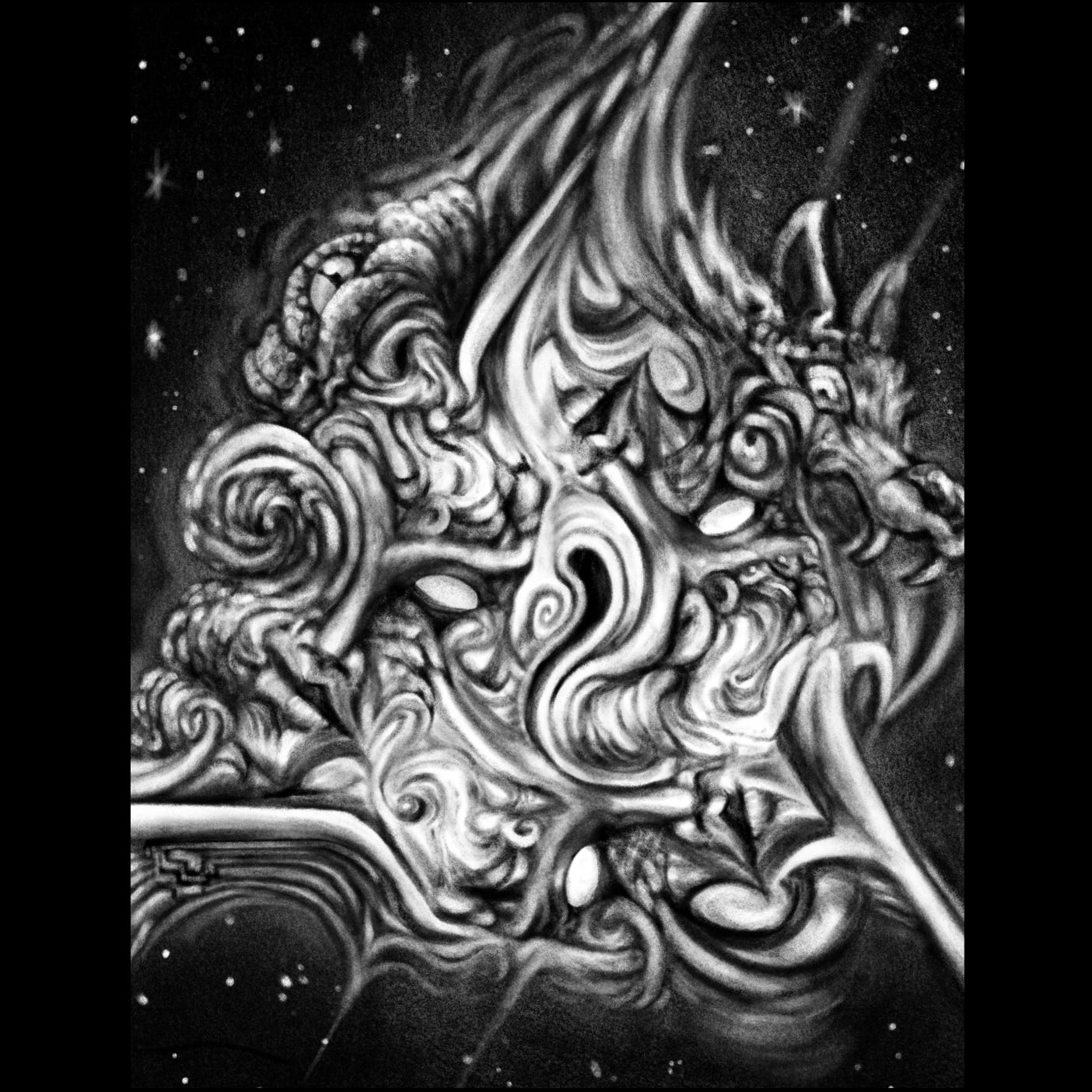
I find myself lying in the sand on a shoreline. I can feel the ocean mist kiss the soles of my feet as I gaze up towards the stars. The sky is incredible. It looks like images from the Hubble telescope. Nebulas of bright orange and blue illuminate in a wave like motion, in sync with the waves crashing near my feet. I reach into my pocket to grab my phone so I can take a picture. No words could possibly do this scene justice. I tap the camera icon but it refuses to open. Then the screen goes black and my phone is completely unresponsive. Frustrated, I look back up at the sky. A new pattern of light is emerging. A cluster of stars swirl in the sky and then freeze in a specific shape. Then they shrink down to a fraction of the constellation’s original size and settle in a spot in the night sky. Then a new constellation similarly appears and shrinks down. This continues until the sky is like a quilt of stitched constellations. I get the sense each cluster is a snapshot of something. Maybe snapshots of all the previous nights that occurred up until now. Maybe snapshots of all nights that will ever occur.
~ Andrew Boyer (dream, artwork)
Linguistic Analysis
The English “camera”, as you might know, is a short version of the neo-Latin “camera obscura” (”dark chamber”), the phenomenon by which upside-down images can be projected onto the wall of a dark room via a pinhole in the wall. I experienced this myself in the strangest way once, wandering around the very first Biennale of Sydney art exhibition on Cockatoo Island in Sydney Harbour with a friend. It was a weekday and there was no-one around, and we thought we’d take a breather from the glare of the day in one exhibit that appeared to be just a dark room. Fine, we thought, this is a minimalist John Cage style thing, we’ll sit here in the dark and eat our sandwiches and contemplate the nothingness. We did, but as my eyes slowly adjusted, I started to see strange lines appearing on the wall. Nothing doing, I thought, probably a trick of the eyes, or an after-effect of the sunlight outside. But it is very strange, the lines almost look like branches, how pretty. Then slowly, like magic, the branches did not disappear. They became more and more defined, until they were a perfect upside-down image of the swaying trees outside that we had just left.
This surprise reveal gave me an enduring sense of the magic of the camera. That pinhole of light from the wall gives rise to one of the most alluring phenomena for humans since the dawn of time, the image. Like a footprint, or a hand stenciled onto a cave wall with ochre, the image created by the camera obscura is not a drawing, but a trace, a ghost, a reflection of something that is or was, even when that thing is gone. Something in the essence of a camera for me is still the “dark chamber” that provided its name. It is a mysterious black box that captures the essence of things. An essence that is different to a drawing, more like a fingerprint left on glass or a shroud, something that the world has brushed against in the faintest way.
Most languages in the world follow the camera/chamber metaphor directly from the Latin, from the Irish “ceamara” to the Amharic ካሜራ (kamera). There are a couple of other interesting formulations out there though. An early Chinese word for camera for example (and still the regular word for a video camera in Taiwan) is 摄影机, or “shadow capturing device”. OK, “影” also means image as well as shadow, but shadow is the original meaning. After all a shadow, like a reflection or footprint, is an archetype for the idea of an image itself, which existed long before painted pictures. This could be seen simply as the flip side of “photography” (light-writing, in Greek), but it’s tempting to read more into the metaphor. The concept of a “shadow” is often connected with both images as well as ghosts or the soul in different languages, as it is for example in the Kunwinjku “kunwaral” (https://njamed.com/entry/waral). The widespread story that Native American people believed that a camera could steal one’s soul seems to have been very exaggerated, but not entirely invented. Probably a random dude appearing with a strange box and a large power imbalance, holding obscure motives and making unrealistic and sometimes unflattering posed images was unsettling enough that you might refuse it. Nevertheless, like my experience of the camera obscura, there is something spooky about the first experience of a camera that this story captures. Perhaps the story says as much about the storytellers, and their own magical sense of the camera, as the subjects it was projected onto.
~ Dan Kennedy
Statistical Analysis
Cameras feature in about 1 out of every 100 dreams (0.9%), putting them right in the middle of the pack of the symbols and themes that we track. However, we analyze the symbol of the camera and the phone separately, and because modern phones also have cameras, it’s likely that dreams about cameras are actually much more frequent. Someone might say in a dream, “I pulled out my phone and took a picture,” without ever referencing the fact that they were using a camera. Phones appear in almost 5% of dreams, so we can be fairly certain that the actual frequency of cameras in dreams is between 1 and 5%.
Last week, there were a total of 1,231 dreams from 608 dreamers in 86 countries.1 There were 25 dreams about cameras causing the 0.9% all-time average to jump to 2.0%. As one would expect, dreams featuring phones likewise increased, in this case from 4.8% to 6.4%. Although it would not be entirely justified to do so, if we were to combine the camera and the phone into a single symbol, it would become the sixth most common, slightly overtaking the symbol of the Father.
Dreams about cameras were neither especially positive nor negative, and while they were more positive last week than on average, it was not a significant change.
For more detailed stats for the week, check out our little weekly stats page on Elsewhere!
Cranial Corner
Hobson and Friston (2012) are among many dream researchers to propose that the dreaming brain is a simulation machine or a “virtual reality generator.”2 On this view, dreams are the results of the mind’s attempt to optimally model and predict its waking environment using a “neuronal system” activated during the REM phase of sleep (McNamara, 2019, p. 199).3 Various names for this kind of simulator –– “prediction-error device,” “Helmholtz machine,” “fantasy simulator”, and others –– proliferate in the neuroscientific literature. At first blush, this seems intuitive; after all, our dreams often feel like limit cases of our imaginative capacities that play out when our senses go offline. Hobson and Friston push this idea further, suggesting that sensory data from our waking hours is sampled and recombined to generate models of the world that guide future behavior by accurately predicting events and minimizing surprises.
According to their version of the simulation theory of dreaming, waking life involves constant, unconscious inferences (Helmholtz, 1866/1962) that sample live sensory data to revise the parameters of our internal world models.4 We are equipped to generate these models through genetic endowment. During sleep, however, precise exteroceptive (sensory) input is actively gated out, yet proprioceptive prediction errors—particularly those generated by oculomotor activity (in the eyes) — continue to drive the predictive system. Dream content, on this view, is the cortex’s attempt to generate a plausible explanation for the fictive visual searches triggered by rapid eye movements and pontine-geniculate-occipital (PGO) waves. Dreams, then, are not merely a side effect of machinery the mind cannot switch off, but an integral part of a purposeful optimization process in which the brain refines its generative model of the world.
Dreams are known for containing elements of the bizarre: discontinuity, incongruity, the counterfactual, the uncanny, and the surreal. Yet despite how commonplace strangeness is in dreaming, the theory struggles to account for individual variation in its prevalence. If the optimization process is governed by the same basic neuromodulatory mechanisms in all healthy adults, and if the generative model is shaped mostly by each person’s waking sensory history, then differences in dream bizarreness would seem to reduce entirely to differences in waking experience. Yet people with broadly similar life histories can have strikingly different dream lives, and Hobson and Friston offer no principled explanation for this. One might suppose that individual differences in precision weighting—which they tie to neuromodulatory systems that do vary between people — could generate such variation, but this remains underdeveloped in their account
More broadly, with respect to simulation theories in general, does conceiving of the brain as a virtual reality generator actually help us understand dream content? Christopher Nolan’s 2010 film Inception dramatizes the simulation theory almost literally: dream architects construct stable, rule-governed worlds that closely resemble the waking world, so much so that the dreamer doesn’t notice the difference—a “true illusion”! Some of the film’s most memorable moments, such as the folding city and the infinite staircase, are exactly the kinds of optimization errors or glitches these kinds of theories would predict.
Yet if you follow the logic of optimal modeling to its conclusion, you end up with an ideal that sits awkwardly alongside other things we value or notice about dreaming. A truly optimal generative model would produce a perfect simulation, something indistinguishable from reality, but dreams are sometimes recognizably strange, lucidity is possible, and for many people these elements are treasured and actively sought after. These are not peripheral curiosities but central features of the dream experience, and simulation theories generally don’t accommodate them without special pleading. In their defense, that messiness could be the point. Even our best evolutionary theories allow for variation in operation, and it may be that the glitches, the strangeness, and the occasional moment of impossible clarity are not failures of the system but its most interesting features. Diversity is the engine of progress, or, in this case, rest.
Data sourced from anonymous metadata from dreams between Feb 16th and Feb 22nd 2026
Hobson, J. A., & Friston, K. J. (2012). Waking and dreaming consciousness: Neurobiological and functional considerations. Progress in Neurobiology, 98(1), 82–98. Open Access. doi: 10.1016/j.pneurobio.2012.05.003
McNamara, P. (2019). The Neuroscience of Sleep and Dreams. Cambridge University Press.
Helmholtz von, H. (1962). Helmholtz’s treatise on physiological optics (J. P. C. Southall, Trans. and Ed.). New York, NY: Dover Publication (Original work published 1866).
 | A guest post by
|
Fascinating as per usual!
I just checked my dream journal and I only have two dreams cameras over the last 8 years!
One dream I was scuba diving with a random man who had a camera and he was searching for something. It felt serious and urgent. A voice in the dream said “there’s a bomb at Mayday bridge”.
The other dream I was taking aura photos of two friends and they were embarrassed to see their auras.
So for myself the camera is collecting information for others to be shared.
I love the magic of the pinhole camera and the fact that the camera sees the world the same way as our eyes/brains do with the image being reversed on the retina and lens.
Maybe the camera shows us that we think things are simple from what we can view with our eyes but it is just one side of the whole.